









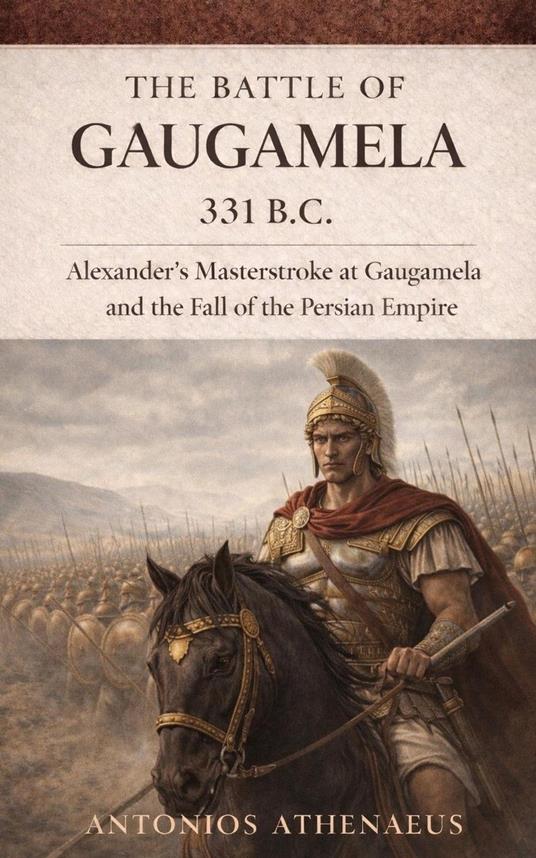
EBOOK IN LINGUA STRANIERA


The Battle of Gaugamela 331 B.C.: Alexander’s Operational Command and the Collapse of Persian Empire

5,99 €
+60
punti 
Venditore: Feltrinelli

Acquista online
Scaricabile subito
Articolo acquistabile con Carta del Docente

Articolo acquistabile con Carta Cultura Giovani e Carta del Merito

Articolo acquistabile con Carta della Cultura

Abbonati a Kobo plus per avere accesso illimitato a questo contenuto

Dati e Statistiche
 Salvato in 0 liste dei desideri
Salvato in 0 liste dei desideri
The Battle of Gaugamela 331 B.C.: Alexander’s Operational Command and the Collapse of Persian Empire
Scaricabile subito
5,99 €
5,99 €
Scaricabile subito
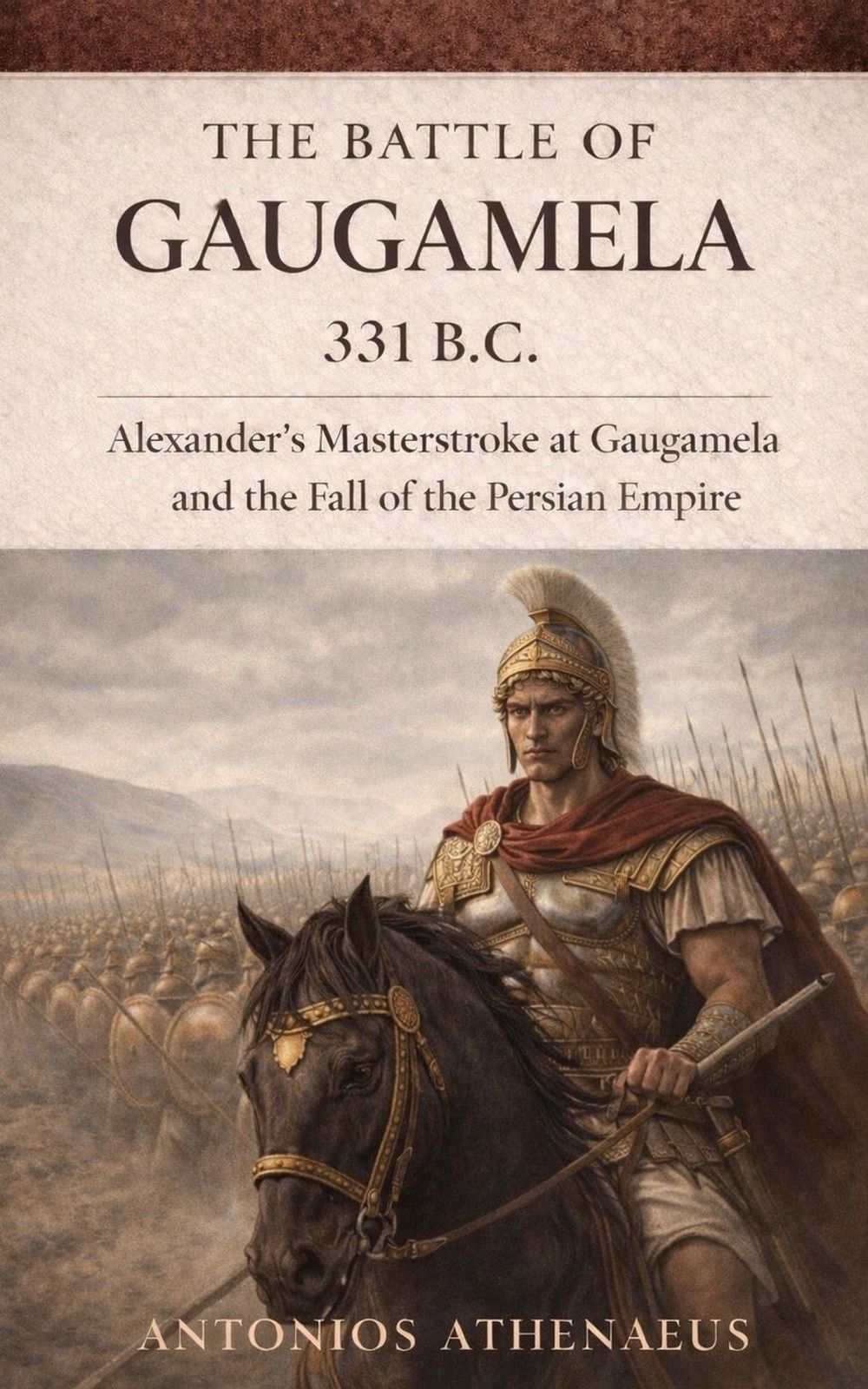


At Gaugamela, numbers did not decide the battle. Command did. In 331 B.C., Alexander of Macedon faced an empire that vastly outnumbered him. The Persian army possessed scale, resources, and political authority. What it lacked was cohesion. The Battle of Gaugamela was not a test of courage or chance—it was a decisive confrontation between two fundamentally different systems of command. This book presents Gaugamela as an operational case study in unified command, battlefield tempo, and the collapse of imperial power. Rather than retelling a familiar heroic narrative, it analyzes how leadership structure, disciplined execution, and decision-speed determined the outcome. Drawing on ancient sources including Arrian, Diodorus, Curtius Rufus, and Plutarch, the study reconstructs the engagement with strategic clarity. Alexander's calculated rightward drift, the stretching of the Persian line, and the coordinated employment of phalanx, Hypaspists, and Companion Cavalry are examined as elements of an integrated operational system. The Persian response—mass cavalry deployment, scythed chariots, and attempted envelopment—is assessed through a tactical lens, revealing why numerical superiority could not compensate for structural weakness. Particular attention is given to moments of operational risk: Parmenion's pressure on the left, the danger of overextension, and the management of cohesion under strain. Gaugamela was not inevitable. It was decided by maintaining control at the critical point. The volume includes detailed battlefield diagrams, operational reconstructions, and a dedicated section on strategic and operational lessons for modern commanders. It is written for readers seeking disciplined military analysis rather than romanticized narrative. Gaugamela was not simply Alexander's greatest victory. It was the moment when strategy overcame scale—and an empire ceased to function.
-
Autore:
-
Anno edizione:2026
-
Editore:
-
Formato:
-
Lingua:Inglese
Compatibilità:
Tutti i dispositivi (eccetto Kindle) Scopri di più
Layout:
Reflowable
EAN:
9798233347290

Formato:
Gli eBook venduti da Feltrinelli.it sono in formato ePub e possono essere protetti da Adobe DRM. In caso di download di un file protetto da DRM si otterrà un file in formato .acs, (Adobe Content Server Message), che dovrà essere aperto tramite Adobe Digital Editions e autorizzato tramite un account Adobe, prima di poter essere letto su pc o trasferito su dispositivi compatibili.
Cloud:
Gli eBook venduti da Feltrinelli.it sono sincronizzati automaticamente su tutti i client di lettura Kobo successivamente all’acquisto. Grazie al Cloud Kobo i progressi di lettura, le note, le evidenziazioni vengono salvati e sincronizzati automaticamente su tutti i dispositivi e le APP di lettura Kobo utilizzati per la lettura.
Clicca qui per sapere come scaricare gli ebook utilizzando un pc con sistema operativo Windows
